Journal
Wallcoverings in McLean, VA: Materials and Durability Guide
Choosing wallcoverings for a McLean, VA home involves more decisions than most people expect, and almost none of them are about pattern. Material, weight, backing and wall condition decide whether a wall still looks right in eight years or starts lifting at the seams by the second winter.
This guide covers the materials worth knowing, how the industry actually measures durability, and which of them suit which rooms. It also covers the things that go wrong specifically in this part of Northern Virginia, where the housing stock and the climate both have opinions about what you hang on a wall.
Why McLean homes are a particular case
Two things about the local building stock change the calculation.
The first is wall substrate. A significant share of McLean homes were built between the 1940s and the 1970s, and many of the older ones have plaster over lath rather than drywall. Plaster is rarely flat. It has waves, hairline cracks and patched repairs, and a thin printed paper will telegraph every one of them once light rakes across the wall. Heavier materials with texture in them hide what is underneath. Thin, flat, high-sheen materials advertise it.
The second is humidity. Northern Virginia summers run humid, and a lot of houses here have finished basements, powder rooms without windows, and sunrooms that swing between temperatures. Paper-backed materials in those rooms are a short-term decision. That is a material problem rather than an installation problem, and it is solvable at the specification stage.
There is also a scale question. Newer construction in this area tends toward tall ceilings and open plans, which changes how a pattern reads. A repeat that looks balanced on a nine foot wall can feel busy across a two story entry.
Wallpaper, wall panels and murals are not the same product
These three get used interchangeably in conversation, and they solve different problems.
Wallpaper comes in pattern repeats designed for full-room coverage. It is the right answer when you want a continuous surface treatment across four walls, or across a room that opens into another.
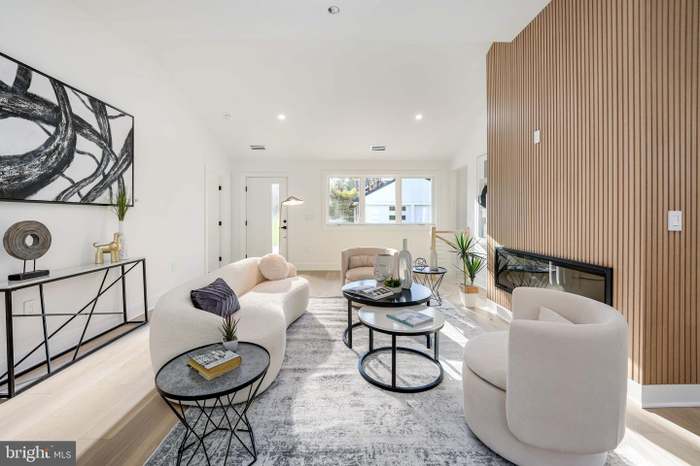
Wall panels add dimensional texture and architectural rhythm. They sit proud of the wall rather than flat against it, which means they cast their own shadows and change appearance as light moves through the day. They also cover irregular substrate more forgivingly than any flat material.
Murals are large-format designs scaled for a feature wall. They are printed to the dimensions of a specific wall rather than repeating, so they are ordered per project rather than per roll.
You can see how each category is organized on our product categories page, which is the fastest way to get oriented before visiting.
Materials compared
Material
Best for
Holds up to moisture
Hides wall flaws
Notes
Non-woven
Most residential rooms
Moderate
Moderate
Breathable, dimensionally stable, strips off dry
Vinyl and vinyl-coated
Kitchens, baths, halls
High
Moderate
Scrubbable, the standard for high-traffic areas
Grasscloth and natural fiber
Dining rooms, studies, bedrooms
Low
High
Seams are visible by design, colors vary by panel
Textile and linen
Formal rooms, bedrooms
Low
High
Soft light response, marks more easily
Wood effect
Feature walls, studies
Moderate
High
Reads as material rather than pattern
MDF panel
Feature walls, halls, high ceilings
Low to moderate
Very high
Rigid, paintable, dimensional
PS polystyrene panel
Baths, basements, kitchens
High
Very high
Lightweight, moisture tolerant, easier to cut
Non-woven
Non-woven has become the default for residential work, and the reason is practical rather than aesthetic. The backing is a blend of natural and synthetic fibers that does not expand when wet, so it goes up without the soaking step older papers required and comes off in full strips later without steaming. If you are the kind of homeowner who might change a room in six years, this matters more than anything about the face material.
Vinyl and vinyl-coated
Vinyl carries the moisture and abrasion load. It belongs in kitchens, powder rooms, mudrooms and any hallway that sees bags, elbows and dog traffic. The tradeoff is that vinyl reads as vinyl in strong daylight, so it is a better fit for working rooms than for formal ones.
Grasscloth and natural fibers
Grasscloth is the material people fall in love with in a showroom and occasionally regret at home, so it is worth being clear about what it does. Panels vary in color from one to the next, and the seams stay visible. That is inherent to the material, not a defect. In a dining room or a study, that variation reads as depth. In a bright open kitchen, it can read as a mistake.
It also has the strongest claim on older McLean walls, because the texture absorbs the irregularity of plaster better than almost anything else.
Textile and linen
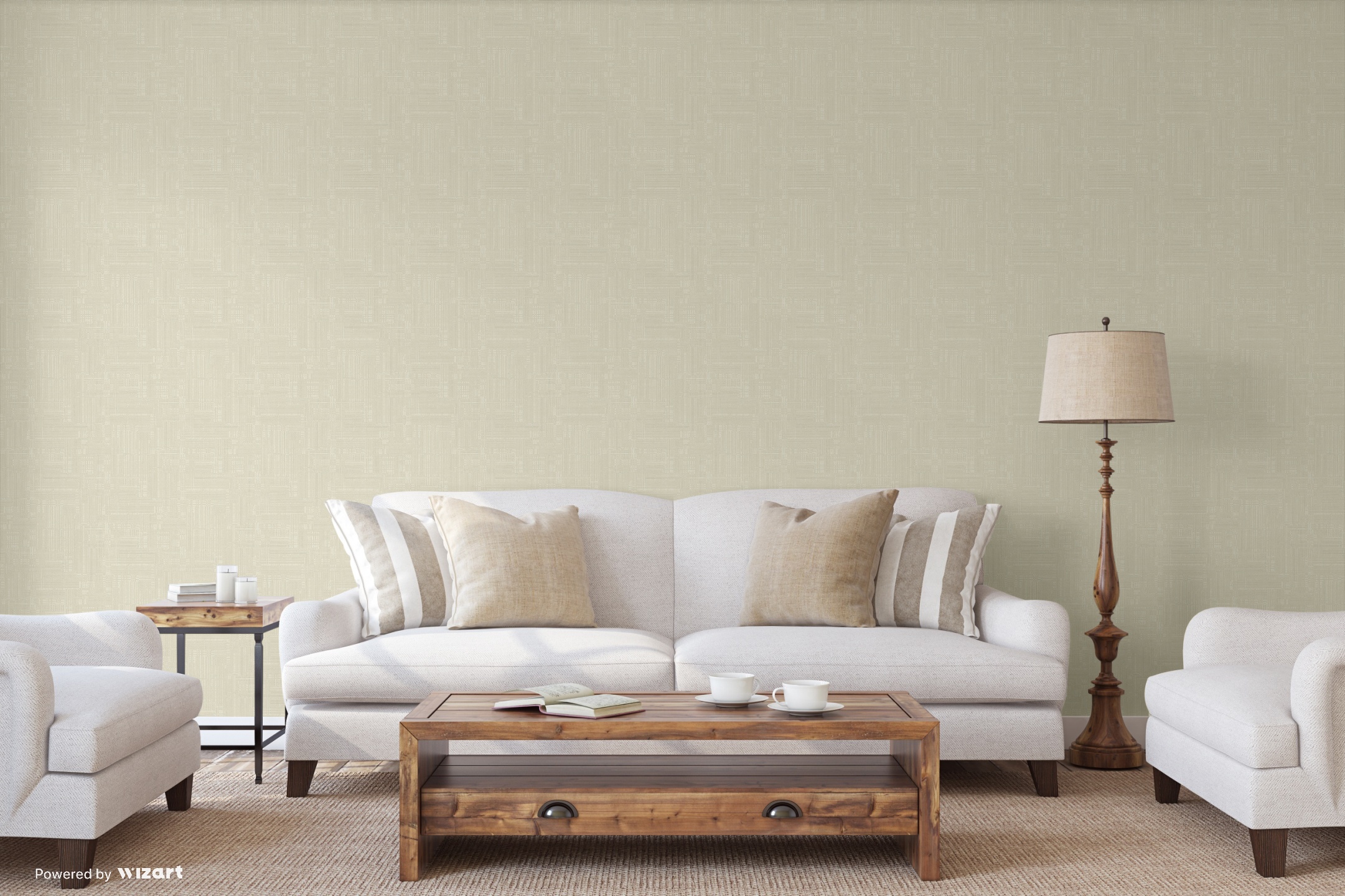
Textile wallcoverings behave like grasscloth in terms of light response but with a finer, more uniform surface. They suit formal rooms and primary bedrooms. Keep them away from anything that splashes.
Wood effect and dimensional panels
Wood effect materials give you grain without the cost and movement of real veneer. Panels go further, adding actual relief to the wall. We carry both MDF and PS polystyrene panels, and the choice between them is usually about the room rather than the look. MDF is rigid and takes paint well, which suits a dry feature wall or a stair run. PS handles moisture and cuts more easily, which makes it the safer option in a basement, a bath or a laundry.
Our full range across both is on the products page.
How durability is actually measured
This is where specification gets useful, and it is the part most residential buyers never see.
Wallcovering durability is classified under ASTM F793, the standard classification of wall coverings by use characteristics. The standard provides criteria by which wall coverings of appropriate use characteristics can be chosen for particular residential and commercial decorating applications, which is a formal way of saying it tells you whether a material can survive where you intend to put it.
The classification runs from decorative categories through three commercial serviceability grades. Type I is the lightest of the commercial grades, generally used where abrasion is limited. Type II is the most widely specified for commercial interiors and carries higher requirements for abrasion resistance, breaking strength, stain resistance, tear resistance and coating adhesion. Type III is built for very heavy traffic. Wolf-Gordon's wallcovering reference sets the categories out in more detail if you want the specifics.
Most residential work does not need commercial grades. Knowing they exist is still useful, because it gives you a vocabulary for asking the right question. Instead of asking whether a material is durable, ask what it is rated for. A powder room in a house with three children is closer to light commercial than most people assume.
Matching material to room
Room
Works well
Be cautious with
Entry and stair hall
Panels, vinyl, wood effect
Delicate textiles at hand height
Living and dining
Grasscloth, textile, murals
High-sheen vinyl in strong daylight
Kitchen
Vinyl, PS panel
Grasscloth, paper-backed materials
Powder room
Vinyl, bold small-scale pattern
Anything paper-backed
Primary bedroom
Textile, non-woven, grasscloth
Busy large-scale repeats
Basement
PS panel, vinyl
MDF panel, natural fiber
Home office
Wood effect, panels, grasscloth
Patterns that compete on camera
That last note is worth a sentence. A lot of McLean homes now have a room that doubles as a video call background, and a large-scale repeat behind your shoulder is distracting in a way it never is in person. Texture works better than pattern for those rooms.
What goes wrong on a McLean install
Skipping wall prep on plaster. Old plaster needs to be sound, cleaned and usually primed before anything goes on it. A wallcovering does not fix a failing wall, and it will not stay attached to one.
Ignoring the sheen of the existing paint. Wallcovering adhesive does not bond well to glossy paint. That wall needs scuffing and priming first.
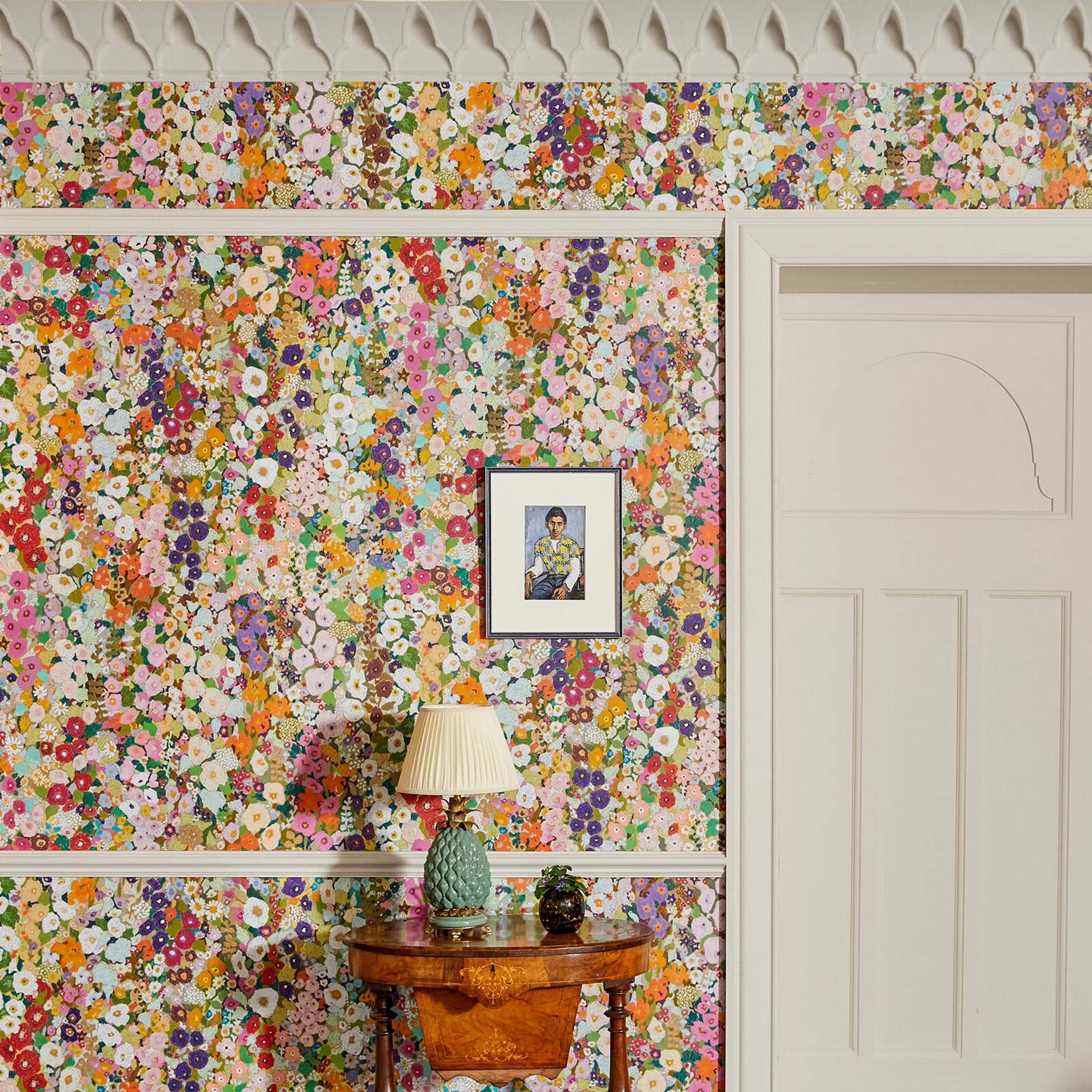
Choosing pattern from a screen. Scale is the single hardest thing to judge from a photograph. A botanical that looks restrained on a website can dominate a dining room, and often works better on one wall than across four.
Underestimating natural light. North-facing rooms in this area get cool, flat light for much of the year. Colors that look warm in a showroom can go gray on the wall.
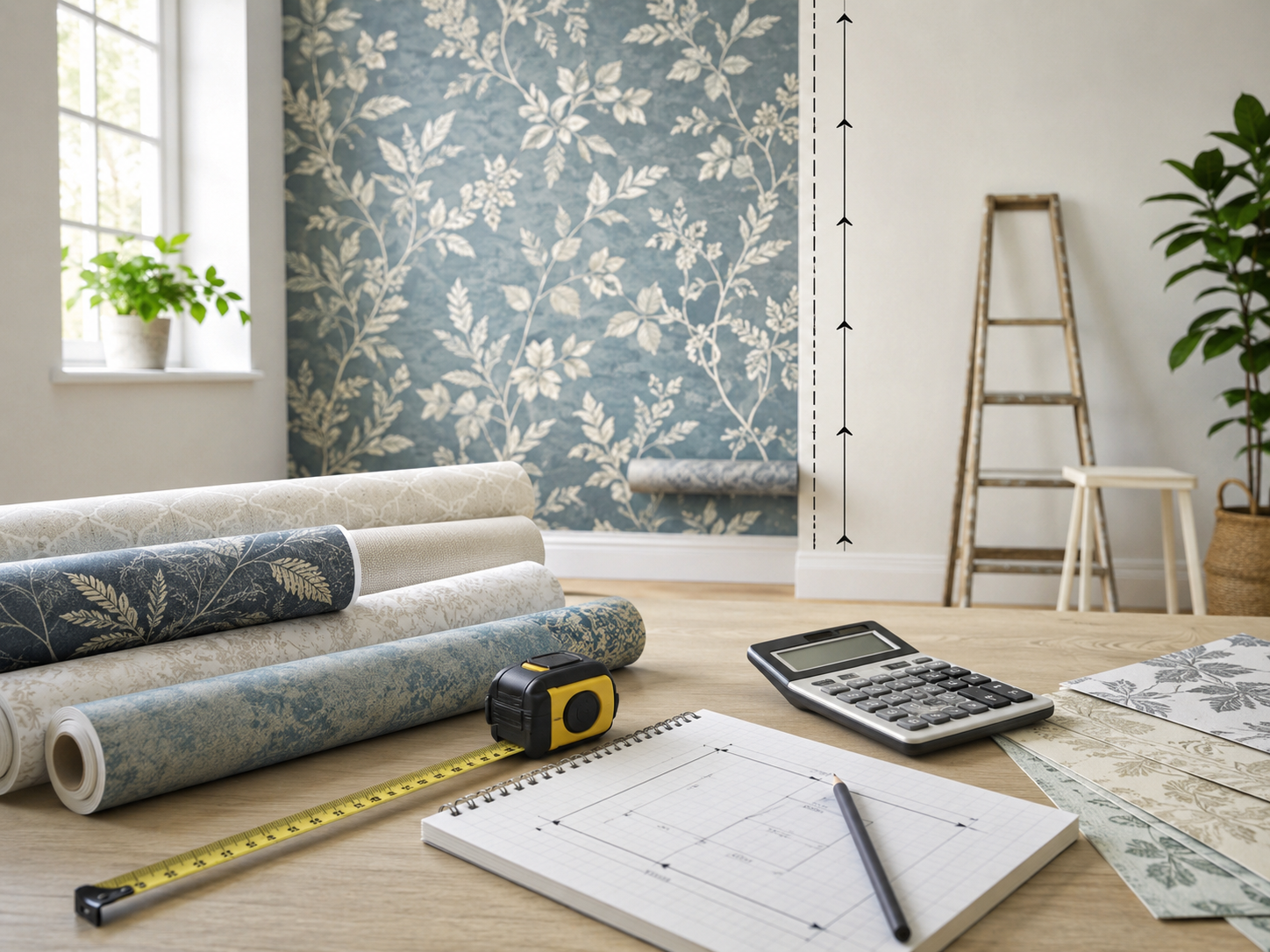
Ordering without a proper measure. Doors, windows and pattern repeats all affect quantity, and running short mid-job means a second dye lot.
How much to order
Wallcoverings are ordered by the roll but calculated by the repeat, which is why quantity surprises people.
A straight match repeat lines up horizontally across seams and wastes relatively little. A half-drop match staggers, which means the second strip starts partway down the pattern and the offcut is longer. The larger the repeat, the more waste, and a large repeat on a tall wall can push waste toward a quarter of what you order.
Two practical rules. Order everything for a room in one go so the dye lot matches, and record the pattern and dye lot numbers somewhere you will find them again. If you need one more roll in two years for a repair, that number is what makes it possible.
Ordering samples first is the only reliable way to check color and scale in your own light. Trade members can request samples through a dealer account for faster project specification.
Frequently asked questions
What are the best wallcoverings for a McLean, VA home?
For most rooms, non-woven materials in a mid-weight are the practical default, since they hide minor wall irregularity and strip off cleanly later. For kitchens, powder rooms and basements, vinyl or PS panels handle moisture far better. For formal rooms, grasscloth and textiles give depth that flat materials cannot.
Can wallcovering go over plaster walls?
Yes, provided the plaster is sound and properly prepared. Loose or crumbling areas need repair first, and the wall needs cleaning and priming. Textured materials such as grasscloth or dimensional panels are more forgiving over uneven plaster than thin flat papers.
How long does wallcovering last?
In a residential room with normal use, a quality material typically lasts fifteen years or more. Lifespan depends far more on the room and the substrate than on the material itself. The same paper will outlive a bathroom install by a decade in a bedroom.
What is the difference between wallpaper and wall panels?
Wallpaper is a flat surface treatment supplied in pattern repeats for full-room coverage. Wall panels are dimensional, sitting proud of the wall to add relief and shadow. Panels cover uneven substrate better and suit feature walls, halls and rooms with tall ceilings.
Is grasscloth a good choice for a bathroom?
Generally no. Natural fibers absorb moisture and will stain and lift in a room that gets steam. Save grasscloth for dining rooms, studies and bedrooms, and use vinyl or a PS panel where humidity is a factor.
Do I need to order extra material?
Yes. Allow for pattern repeat waste, which increases with repeat size and is higher for half-drop matches than straight matches. Order the whole room at once so the dye lot is consistent, and keep the roll numbers for future repairs.
Seeing wallcoverings in person before you commit
Every material described here behaves differently under real light, on a real wall, at real scale. That is the argument for handling samples rather than choosing from a screen, and it is why a showroom visit shortens the decision rather than lengthening it.
Our Fairfax design center on Dorr Avenue is a short drive from McLean, Vienna, Great Falls and Tysons, and carries wallpapers, murals and architectural panels alongside the adhesives specified for each. Bring photos of the room, its dimensions, and a note of which direction the windows face.
You can browse the full range at morekinteriors.com/products, read more about us, or get in touch with a project and we will tell you what suits it.