Journal
Accent Wall Ideas: Wallpaper, Panels and Murals for Every Room
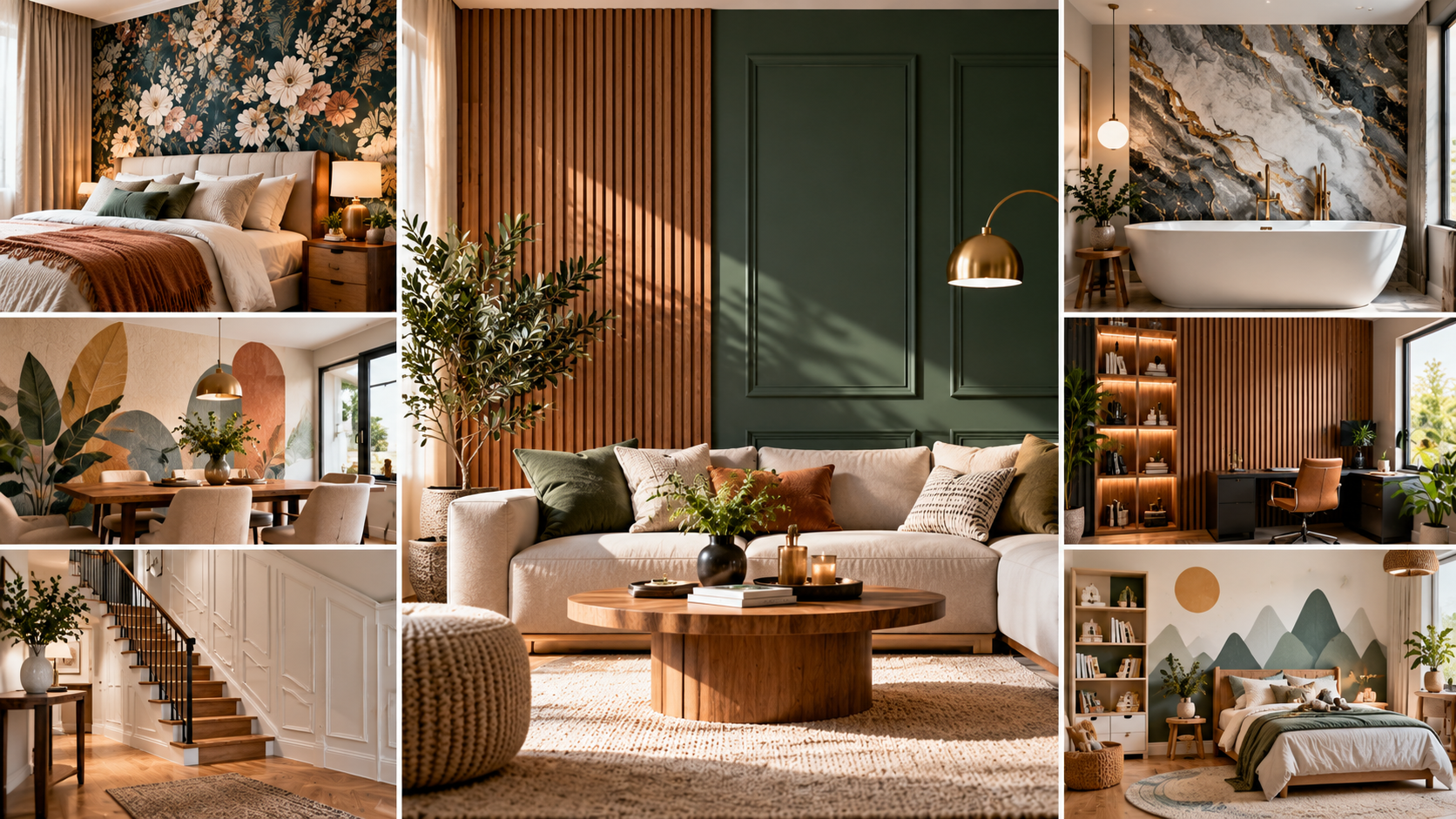
An accent wall is the fastest way to change how a room feels without changing anything else in it. One wall, finished differently from the other three, gives the eye somewhere to land and the room a center of gravity.
Most accent wall ideas online stop at a color swatch or a photo of somebody else's living room. The two decisions that actually decide the result come before that: which wall, and which material. Get those right and almost any pattern works. Get them wrong and even a beautiful wallpaper looks like an accident.
This guide covers both, then walks through ideas for wallpaper, wall panels and murals, with room-by-room advice and the mistakes we see most often.
How to Choose the Right Wall
The right wall is rarely the one with the most space. It is the one the room is already pointing at. Four rules narrow it down quickly.
1. Start with the wall you see first. Stand in the doorway. The wall you face is the natural focal point, and an accent there reads as intentional the moment you walk in.
2. Use the wall furniture already anchors. Behind the bed, behind the sofa, behind a dining table or a TV. Furniture tells you where the room's center is. An accent wall reinforces it instead of competing with it.
3. Choose an unbroken wall. A wall interrupted by two windows and a door gets chopped into strips, and the pattern never reads as a whole. A solid wall, or one with a single centered window, works far better.
4. Consider the fifth wall and the end wall. A papered ceiling in a dining room or powder room is an accent wall turned 90 degrees. The end of a long hallway is another overlooked spot: a mural or panel there pulls you down the corridor.
One more check: look at the light. A wall opposite a large window gets direct light, which shows texture and color at their best. A wall beside the window gets raking light, which exaggerates relief.
That suits dimensional panels, but it also shows every flaw in a flat wallpaper on an uneven wall.
Accent Wall Ideas by Material
Paint is the default accent wall, and it is the one people outgrow fastest. A painted wall changes the color of a room. Wallpaper, panels and murals change its surface, which is what makes a wall feel finished rather than painted.
Wallpaper accent wall ideas
• A bold pattern on one wall only. Large botanicals, damasks and geometrics that would overwhelm four walls look confident on one. This is the classic accent wall, and it works best behind a bed or a dining table.
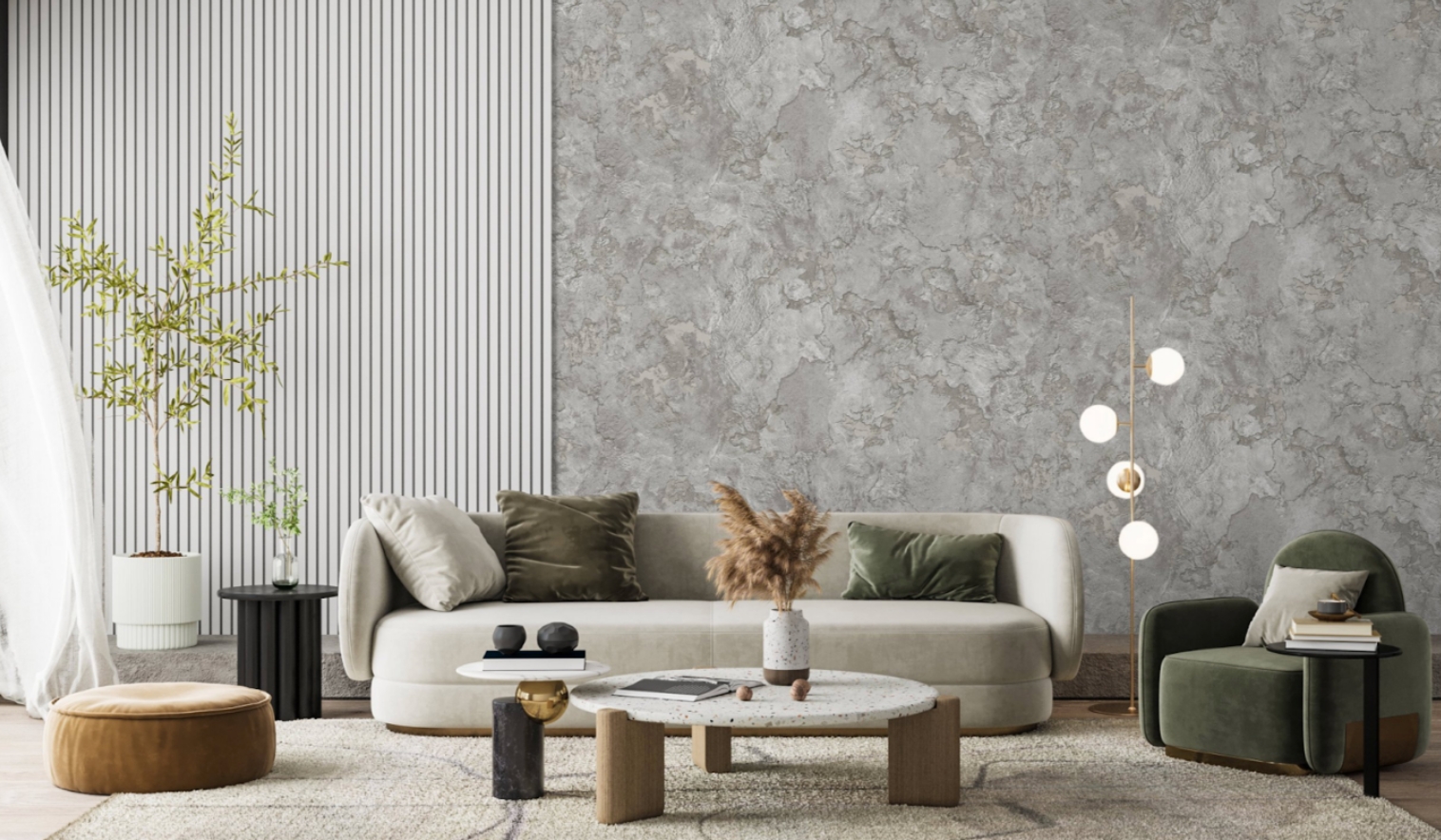
• Texture instead of pattern. Grasscloth, linen-look and plaster-effect wallpapers add depth without adding visual noise. They suit living rooms and home offices, where a busy pattern behind your shoulder is distracting on video calls.
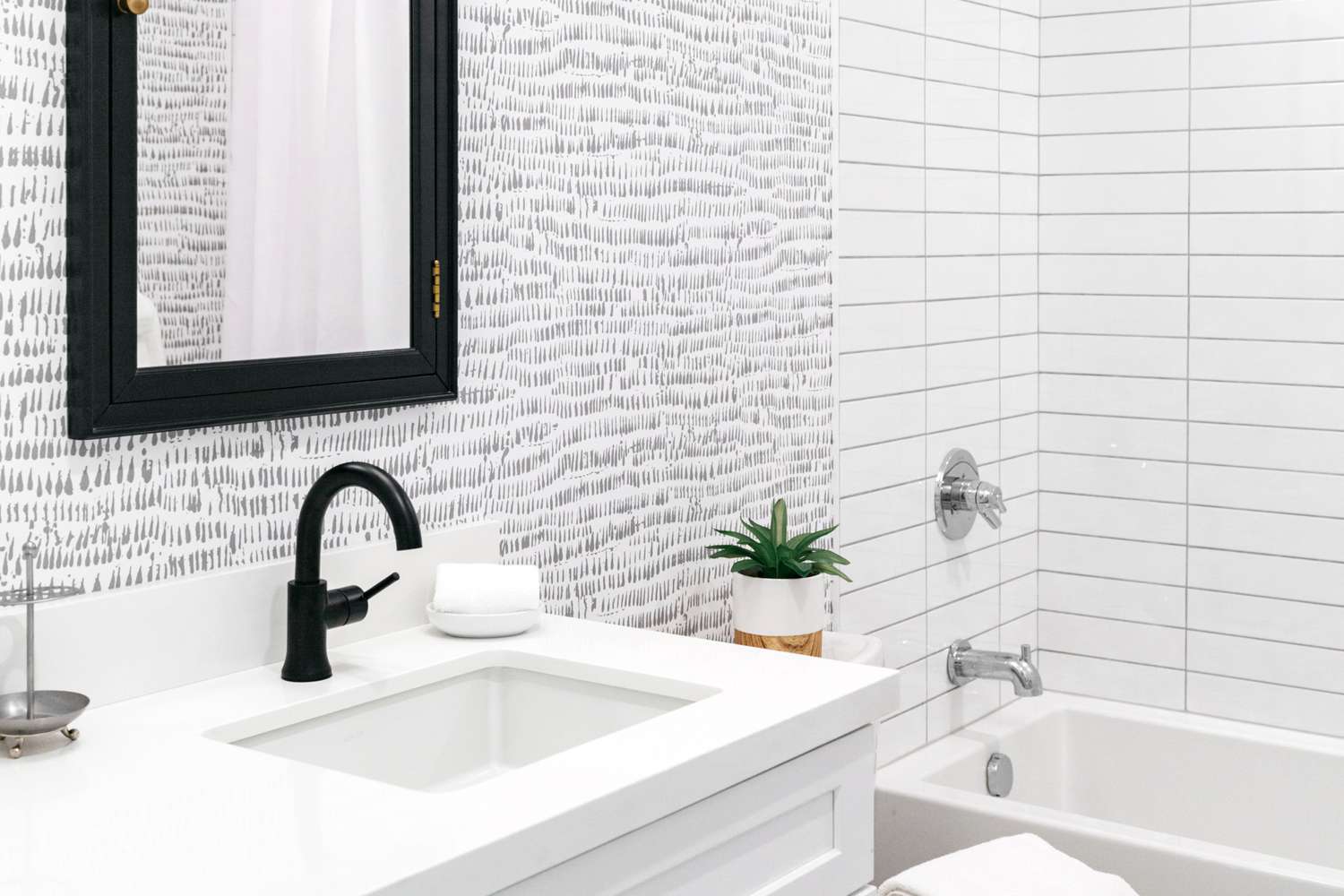
• Small scale, high contrast in a powder room. Small rooms can take more pattern than large ones, because you are only in them for a minute. A dark, small-repeat wallpaper on the vanity wall, or all four walls, makes a powder room memorable.
• The papered ceiling. In a dining room with a simple chandelier, a ceiling paper in a subtle pattern frames the table from above and leaves the walls free for art.
• Wallpaper behind open shelving. The back of built-in shelves or a bookcase is a small, contained accent that changes a whole wall of storage.
Browse our wallpaper collections to see how pattern and texture compare at full scale.
Wall panel accent wall ideas
Panels are the accent wall for people who want architecture, not decoration. They sit proud of the wall, cast their own shadows and change through the day as light moves.
• Wood slat or fluted walls. Vertical slats make ceilings feel taller and read as warm and modern behind a TV, a sofa or a bed. They also hide the cables of a wall-mounted TV better than any flat finish.
• Geometric 3D panels. Repeating relief patterns turn a plain entry or stair wall into a sculptural surface, especially where a light washes down from above.
• Half-height panels with wallpaper above. Panels to about one third of the wall height protect the lower wall from chairs and bags. Wallpaper above adds pattern. This works well in dining rooms, hallways and kids' rooms.
• Panels on uneven walls. In older homes with wavy plaster, dimensional panels hide what flat wallpaper would reveal.
The material matters by room. MDF panels are rigid and paintable, which suits dry feature walls. PS polystyrene panels handle moisture and suit basements, baths and laundry rooms. Our McLean materials and durability guide compares them in detail. See the wall panel collections for profiles and series.
Mural accent wall ideas
A mural is the one accent wall that is designed for one specific wall. Instead of repeating, it is produced at that wall's dimensions, so the composition lands exactly where you want it.
• A botanical or landscape behind the bed. It turns the headboard wall into a view, which is especially welcome in bedrooms with small windows.
• A soft, large-scale scene in a dining room. Murals give a dining room the feeling of a destination without needing more furniture or art.
• A playful mural in a kids' room or playroom. It grows with the child better than a theme bedding set, and it can be replaced in one day when tastes change.
• An end-of-hall mural. It turns a corridor into a view and makes a short hall feel longer.
For more, read why custom wall murals change a room and browse our mural collections.
Accent Wall Ideas Room by Room
Every room has a wall that wants to be the accent and a material that suits how the room is used.
Room
Best wall
Material that works
Watch out for
Living room
Behind the sofa or TV
Wood slat panels, textured wallpaper
Busy patterns behind a TV compete with the screen
Bedroom
Behind the bed
Murals, soft botanical or textile-look wallpaper
High-contrast geometrics can feel restless at night
Dining room
Opposite the entry, or the ceiling
Bold wallpaper, landscape murals, half panels
Delicate materials at chair-back height
Entry and stairs
The first wall you see, the stair wall
3D panels, large-scale pattern
Scale that only works close up, since you see it from across the room
Home office
Behind your desk chair
Wood effect, texture, panels
Large repeats that distract on video calls
Powder room
Vanity wall or all four walls
Small-scale, dark, high-contrast vinyl
Paper-backed materials near the sink
Kids' room
Behind the bed or play area
Murals, scrubbable vinyl
Themes they will outgrow in two years
Basement
The wall facing the stairs
PS panels, vinyl
MDF and natural fibers in damp areas
In open-plan homes, choose one accent wall per sight line. Two accent walls visible from the same spot cancel each other out.
Scale, Light and Pattern: The Rules That Make It Work
Match the pattern scale to the viewing distance. A pattern you see from across a living room needs to be larger than one you see from a powder room vanity. Small repeats on a big wall viewed from far away blur into a flat color. Large repeats in a small room can feel like they are leaning in.
Count the repeats across the wall. As a rough guide, a wall should show at least two or three full repeats across its width. Fewer, and the pattern reads as a fragment. If a pattern you love only fits one and a half times, a mural or a smaller-scale version may suit the wall better.
Check the color in your own light. North-facing rooms in Northern Virginia get cool, flat light for much of the year, and warm colors can go gray. South- and west-facing rooms warm everything up in the afternoon. Always see a sample on the actual wall, at morning and evening.
Let the accent wall set the palette. Pull one or two colors from the wallpaper or mural into cushions, a rug or art elsewhere in the room. The accent wall then feels connected, not stuck on.
Mind the edges. An accent wall needs a clean stop. Inside corners and existing trim make natural edges. On an open wall, a vertical trim strip or a panel return gives the finish somewhere to end.
Accent Wall Mistakes to Avoid
• Choosing from a screen. Scale and color are the two things a photo gets wrong most often. A sample in your own light is the only reliable test.
• Picking the wall with the most doors. A wall broken by openings turns a pattern into stripes. Choose the most solid wall, even if it is smaller.
• Skipping wall preparation. Wallpaper and murals show every bump and crack in the wall behind them. Glossy paint needs scuffing and priming before any adhesive will hold.
• Using the wrong adhesive. Each material has its own system. Use the adhesive specified for wallpaper or for panels, not whatever is left in the garage.
• Running short. Order everything for the wall at once, plus allowance for pattern repeat waste. A second order can come from a different dye lot and will not match.
• Too many accents. One accent wall per room, or per sight line in an open plan. A second one competes with the first.
Accent Wall FAQ
Which wall should be the accent wall? Usually the first wall you see when entering, or the wall behind the bed, sofa or dining table. Choose a solid wall without many doors or windows.
Is wallpaper or paint better for an accent wall? Paint changes color only. Wallpaper, panels and murals add pattern, texture or depth, which makes the wall feel finished and lasts longer before it looks dated.
Are accent walls still in style in 2026? Yes, but the look has shifted from bright paint to texture and material: slat panels, grasscloth-style finishes and large-scale murals. See our 2026 wallpaper trends.
Can I use wall panels in a bathroom or basement? Yes, with the right material. PS polystyrene panels tolerate moisture. MDF panels are better kept in dry rooms.
See Your Accent Wall Before You Commit
Try patterns on your own room with our Home Visualizer, then order samples to check scale and color in your own light. Or visit the Morek Interiors showroom at 2824 Dorr Ave, Unit A, in Fairfax, Virginia, to see wallpapers, wall panels and murals at full size. Bring a photo of the wall, its dimensions and the direction the windows face, and contact our team to book a consultation.