Journal
Wallpaper on Ceilings: Design Ideas and Installation Tips
Why Wallpapering a Ceiling Can Transform a Room
Ceilings are often overlooked when planning an interior design project, even though they can have a significant influence on how a room looks and feels. While walls, furniture, flooring, and lighting usually receive most of the attention, the ceiling offers another opportunity to introduce color, texture, pattern, and visual interest. Wallpapering a ceiling can turn an otherwise ordinary surface into an intentional design feature that brings the entire room together.
Unlike a traditional accent wall, ceiling wallpaper draws attention upward and creates a different kind of visual experience. Depending on the pattern, color, and scale, it can make a room feel more intimate, add architectural character, or introduce a decorative element that complements the surrounding interior without competing with the furniture.
Whether used in a dining room, bedroom, living space, or powder room, wallpaper can give a ceiling a more distinctive appearance. The key is selecting a design that works with the room's proportions, lighting, architectural details, and overall style.
Choosing the Right Wallpaper for Your Ceiling
Choosing wallpaper for a ceiling requires a slightly different approach than selecting a design for vertical walls. Patterns are viewed from a different angle, lighting conditions can change how colors appear, and the relationship between the ceiling and the rest of the room becomes particularly important.
Patterns That Work Well on Ceilings
Small-scale patterns, subtle geometric designs, botanical motifs, and repeating decorative elements can all work well on ceilings. The most appropriate pattern depends on the room's size, ceiling height, and the amount of visual detail already present in the space.
Smaller patterns can create a consistent decorative effect without overwhelming the room. Larger patterns, on the other hand, can make a stronger statement when used in spaces with sufficient visual openness and carefully planned furniture arrangements.
When considering a patterned ceiling, pay attention to how the design will appear across the entire surface. A pattern that looks attractive on a small wallpaper sample may feel significantly different when repeated across a large ceiling.
Textured Wallpaper and Subtle Designs
Textured wallpaper can be an excellent choice for ceilings when the goal is to introduce depth without relying on a bold pattern. Linen-inspired finishes, understated organic textures, soft metallic details, and delicate decorative designs can add sophistication while maintaining a balanced interior.
These options are particularly useful in rooms where the walls already feature prominent colors, artwork, architectural panels, or patterned furnishings. A more restrained ceiling treatment can complement these elements without making the room feel visually crowded.
Color Selection and Visual Balance
Ceiling wallpaper does not necessarily need to match the wall color. It can complement existing colors, introduce a contrasting shade, or create a subtle transition between different elements of the interior.
Light colors and soft patterns can help maintain an airy appearance, while deeper tones may create a more intimate and dramatic atmosphere. The surrounding walls, flooring, window treatments, and furniture should all be considered when selecting a ceiling wallpaper color.
For inspiration, explore the latest wallpaper trends and design ideas to see how patterns, textures, and colors can influence the overall character of an interior.
Ceiling Wallpaper Ideas for Different Rooms
Wallpaper can be used on ceilings throughout the home, but its impact varies depending on the purpose of the room, its proportions, and the existing design elements.
Living Rooms and Family Spaces
In living rooms, ceiling wallpaper can add character to a space without introducing additional furniture or decorative objects. A subtle pattern above a seating area can create a cohesive design, while a more expressive wallpaper can complement a chandelier, architectural feature, or carefully arranged furniture.
For living rooms with neutral walls, a patterned ceiling can introduce color and visual interest. In spaces that already have strong design elements, a softer texture or understated pattern may be the better choice.
Bedrooms and Relaxing Interiors
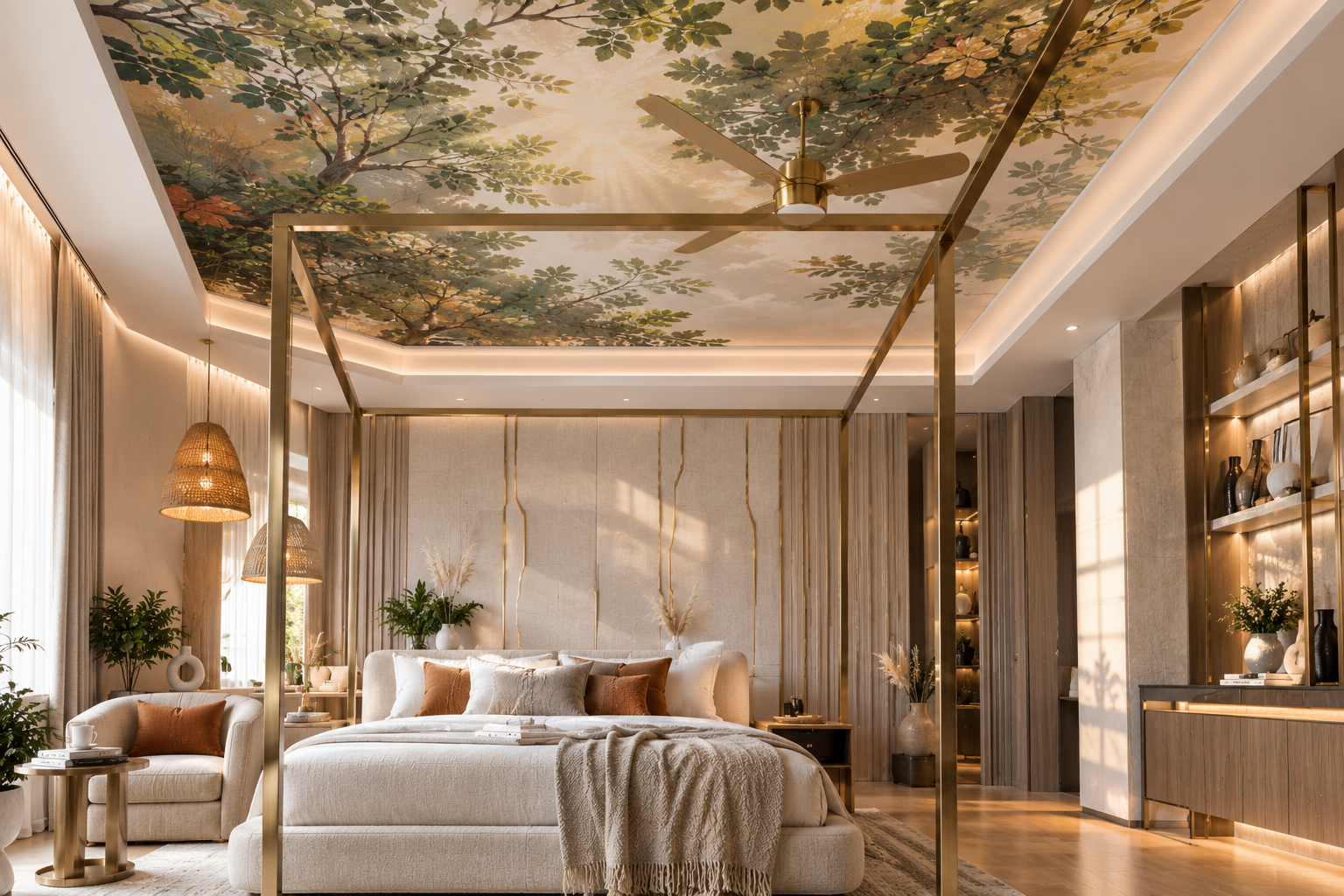
A bedroom ceiling can become an unexpected decorative feature that enhances the room's atmosphere. Soft botanical patterns, delicate textures, muted colors, and gentle repeating designs can create a more relaxed environment.
Wallpaper above the bed can also establish a visual connection between the ceiling, headboard, and surrounding walls. The design should feel comfortable and balanced rather than overly busy, particularly in a room intended for rest.
Dining Rooms and Formal Spaces
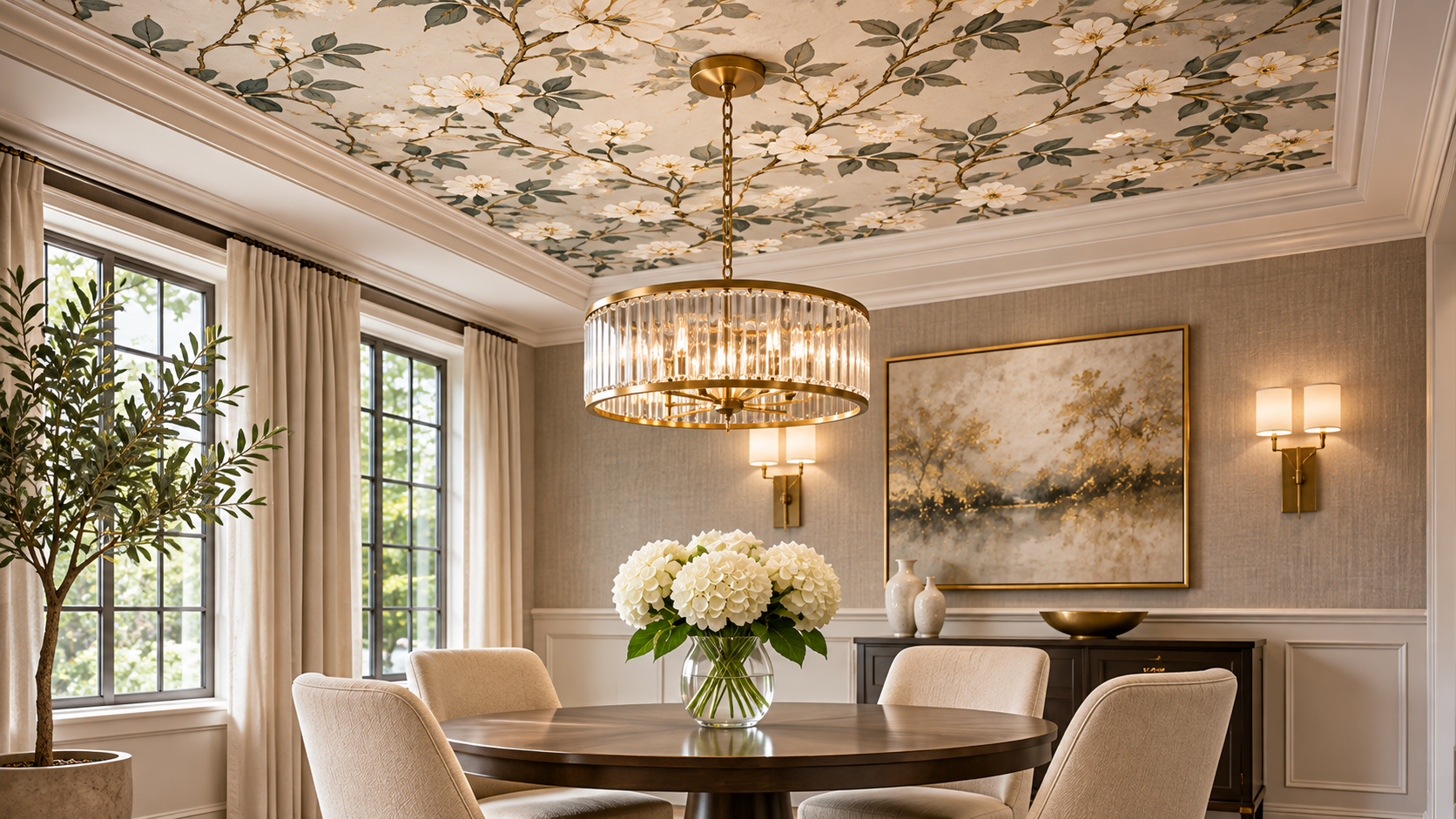
Dining rooms are often among the best spaces for more decorative ceiling treatments. A patterned ceiling can complement a dining table, chandelier, wall molding, or formal furniture arrangement while creating a sense of visual completeness.
In rooms with a defined dining area, ceiling wallpaper can help establish a distinct atmosphere without requiring changes to the floor plan. Damask patterns, elegant botanical designs, geometric motifs, and refined textures can all contribute to a more sophisticated setting.
Entryways and Smaller Rooms
Entryways, powder rooms, and smaller spaces can benefit from ceiling wallpaper because they offer an opportunity to experiment with design in a more contained area. A distinctive pattern may create a memorable first impression while adding personality to an otherwise simple room.
In a smaller space, the relationship between the ceiling and the walls becomes especially important. A coordinated design can make the room feel intentional, while an overly contrasting pattern may create visual tension if the surrounding elements are not carefully considered.
How Ceiling Wallpaper Affects the Perception of Space
The ceiling is an important part of a room's visual proportions. Wallpaper can influence how high, wide, open, or intimate a space appears, depending on the pattern, color, and placement.
Ceiling Height and Pattern Scale
Rooms with lower ceilings often benefit from designs that do not create excessive visual weight. Smaller patterns, subtle textures, and lighter color combinations can help maintain a sense of openness.
Higher ceilings can accommodate more expressive patterns, larger motifs, or darker colors without necessarily making the room feel confined. However, the scale of the wallpaper should still relate to the size of the room and the distance from which the ceiling is viewed.
Light and Color Influence the Room's Atmosphere
Light-colored ceiling wallpaper can reflect more light and help maintain a bright appearance. Darker designs may create a more intimate atmosphere, particularly in rooms where the ceiling is intended to become a defining feature.
Color also affects how the ceiling relates to the walls. A coordinated palette can create a seamless appearance, while contrasting colors may establish a more dramatic visual separation between surfaces.
Creating Visual Depth
Patterns with movement, dimensional textures, and carefully selected decorative elements can make a ceiling feel more visually engaging. Rather than appearing as a flat surface, the ceiling becomes another layer of the interior design.
This approach can be especially effective in rooms with simple architectural layouts, where wallpaper provides additional character without requiring structural changes.
Coordinating Ceiling Wallpaper With Walls and Interior Elements
A successful ceiling wallpaper design should feel connected to the rest of the room. It does not need to match every surface, but it should complement the colors, materials, textures, and architectural features already present.
When coordinating wallpaper with walls, consider whether the ceiling should continue an existing pattern, introduce a new texture, or create a subtle contrast. Rooms with decorative wall panels, detailed molding, or prominent artwork may benefit from a quieter ceiling design.
Furniture and flooring should also influence the selection. Wood finishes, upholstered furniture, stone surfaces, and metal accents all contribute to the overall visual character of a space. Ceiling wallpaper can reinforce these elements through color and pattern without repeating them literally.
For interiors featuring decorative wall treatments, it is worth exploring different accent wall ideas using wallpaper, panels, and murals. The same principles of material selection, pattern scale, and visual balance can help guide ceiling design.
The Role of Lighting in Ceiling Wallpaper Design
Lighting can dramatically change the appearance of ceiling wallpaper. Natural light, recessed fixtures, chandeliers, pendant lights, and indirect lighting may reveal different aspects of a pattern or texture throughout the day.
Natural Light
Rooms with large windows may experience changing light conditions throughout the day. A wallpaper that appears soft and neutral in the morning may look warmer or more pronounced later in the afternoon.
Before making a final selection, evaluate wallpaper samples in the actual room and observe them under different lighting conditions. This can help prevent unexpected changes in color or contrast after installation.
Chandeliers and Pendant Lights
Decorative ceiling fixtures often become focal points in dining rooms, bedrooms, and living spaces. Wallpaper can complement these fixtures by providing a background that enhances their shape, finish, and visual presence.
When selecting a pattern, consider how the fixture will interrupt or interact with the wallpaper design. A large chandelier positioned in the center of a patterned ceiling may influence how the pattern is perceived across the room.
Recessed and Indirect Lighting
Recessed lights provide a more discreet lighting solution, while indirect lighting can emphasize the ceiling's texture and create a soft atmosphere. However, light directed across a ceiling at a shallow angle may reveal surface imperfections or uneven areas beneath the wallpaper.
Lighting should therefore be considered as part of the overall design and installation plan rather than as a separate finishing detail.
Should You Wallpaper the Entire Ceiling or Create a Feature?
Wallpaper can be installed across an entire ceiling or used to highlight a specific architectural area. The best approach depends on the room's proportions, existing features, and the visual effect you want to achieve.
Wallpapering the Entire Ceiling
Covering the entire ceiling can create a cohesive and immersive design. This approach works particularly well when the wallpaper has a pattern or texture that can be appreciated across a larger surface.
In rooms with relatively simple walls and furnishings, a fully wallpapered ceiling can become the defining design element. It may also help establish a more intimate atmosphere in spaces such as dining rooms and bedrooms.
Creating a Ceiling Feature
In some interiors, wallpaper may be used only within a tray ceiling, recessed section, or other defined architectural area. This allows the pattern to become a focal point while leaving the surrounding ceiling relatively simple.
A defined ceiling feature can be especially effective when it works with existing architectural details rather than competing with them. The borders, transitions, and placement of the wallpaper should appear deliberate and well integrated into the room.
Important Considerations Before Installing Ceiling Wallpaper
Ceiling wallpaper requires careful planning because installation involves working overhead and maintaining alignment across a large surface. Before choosing a design, several practical considerations should be evaluated.
- Surface condition: The ceiling should be smooth, clean, stable, and free from loose paint, dust, or other material that could interfere with adhesion.
- Surface preparation: Repairs, sanding, and appropriate priming may be necessary before installation.
- Pattern alignment: Repeating patterns require careful planning to maintain consistency between adjoining strips.
- Lighting and imperfections: Ceiling lights may highlight irregularities that are less noticeable under normal conditions.
- Wallpaper material: The material and adhesive should be suitable for the ceiling surface and the conditions of the room.
- Installation planning: Working overhead can be more challenging than wallpapering vertical walls, making preparation and accurate measurements especially important.
It is also important to calculate material requirements carefully. Pattern repeats, trimming, and the dimensions of the ceiling can affect the amount of wallpaper needed. The wallpaper quantity calculator and pattern repeat guide can help explain why pattern matching and additional material should be considered when planning a wallpaper project.
Common Ceiling Wallpaper Design Mistakes to Avoid
Even an attractive wallpaper can produce an unbalanced result if it is not selected with the room's proportions and design elements in mind. Avoiding a few common mistakes can help create a more cohesive interior.
- Choosing a pattern that is too busy: Highly detailed designs may feel overwhelming when viewed across an entire ceiling, especially in smaller rooms.
- Ignoring ceiling height: Patterns and colors that create excessive visual weight may make a lower ceiling feel more enclosed.
- Overlooking lighting: Wallpaper can appear different under natural light, warm fixtures, and recessed lighting.
- Creating too much visual contrast: A ceiling design that does not relate to the walls, furniture, or flooring may feel disconnected.
- Skipping surface preparation: Uneven or damaged ceilings can affect both the finished appearance and the installation quality.
- Underestimating pattern alignment: Repeating designs require accurate planning, particularly across large ceiling surfaces.
Taking time to evaluate samples, room dimensions, and existing design features can help prevent these issues and produce a ceiling that complements the interior rather than competing with it.
Is Ceiling Wallpaper Right for Your Interior?
Ceiling wallpaper can be an excellent choice for homeowners and designers who want to introduce more character into a room without making significant structural changes. It works particularly well when the ceiling has a clear relationship with the furniture arrangement, lighting, and surrounding architectural features.
Rooms with relatively simple walls may provide more flexibility for decorative ceiling designs. In more visually complex interiors, subtle patterns or textured finishes can create a sense of refinement without adding unnecessary detail.
The decision ultimately comes down to the desired atmosphere. Some interiors benefit from a bold ceiling that immediately attracts attention, while others look best with a quieter design that adds depth in a more understated way.
Wallpaper can also be used to complement other wallcovering materials throughout the home. Exploring different wallpaper collections and patterns can help identify colors, textures, and designs that work well with a particular interior style.
Create a More Memorable Interior With Ceiling Wallpaper
A ceiling does not have to remain a simple, unadorned surface. With the right wallpaper, it can become an integral part of the room's design, adding texture, color, depth, and visual character.
From subtle textures in a bedroom to expressive patterns in a dining room, ceiling wallpaper offers a range of possibilities for creating interiors that feel more considered and distinctive. The most successful designs balance the wallpaper with the room's proportions, lighting, furnishings, and architectural details.
Whether you are planning a subtle transformation or a more dramatic statement, thoughtful wallpaper selection can help bring a new perspective to the space. Exploring different patterns and materials is a good starting point for discovering how a ceiling can contribute to a more complete and memorable interior.